
January often brings a push to reset priorities and get things moving. But a new plan does not change much if the environment around the work keeps creating the same friction.
Research from Harvard has shown that indoor environmental quality – including air quality, lighting and materials – can have a significant effect on cognitive performance. In practical terms, the workplace can either support clear thinking or make it harder.
In our projects, we see the workplace as more than a collection of desks and meeting rooms. A workplace change is also a decision about how people are expected to work, meet, concentrate and collaborate.
When the space removes avoidable distractions and everyday friction, people have more capacity for the work itself. That may sound simple, but it is often the difference between a workplace that looks finished and one that genuinely supports the organisation.
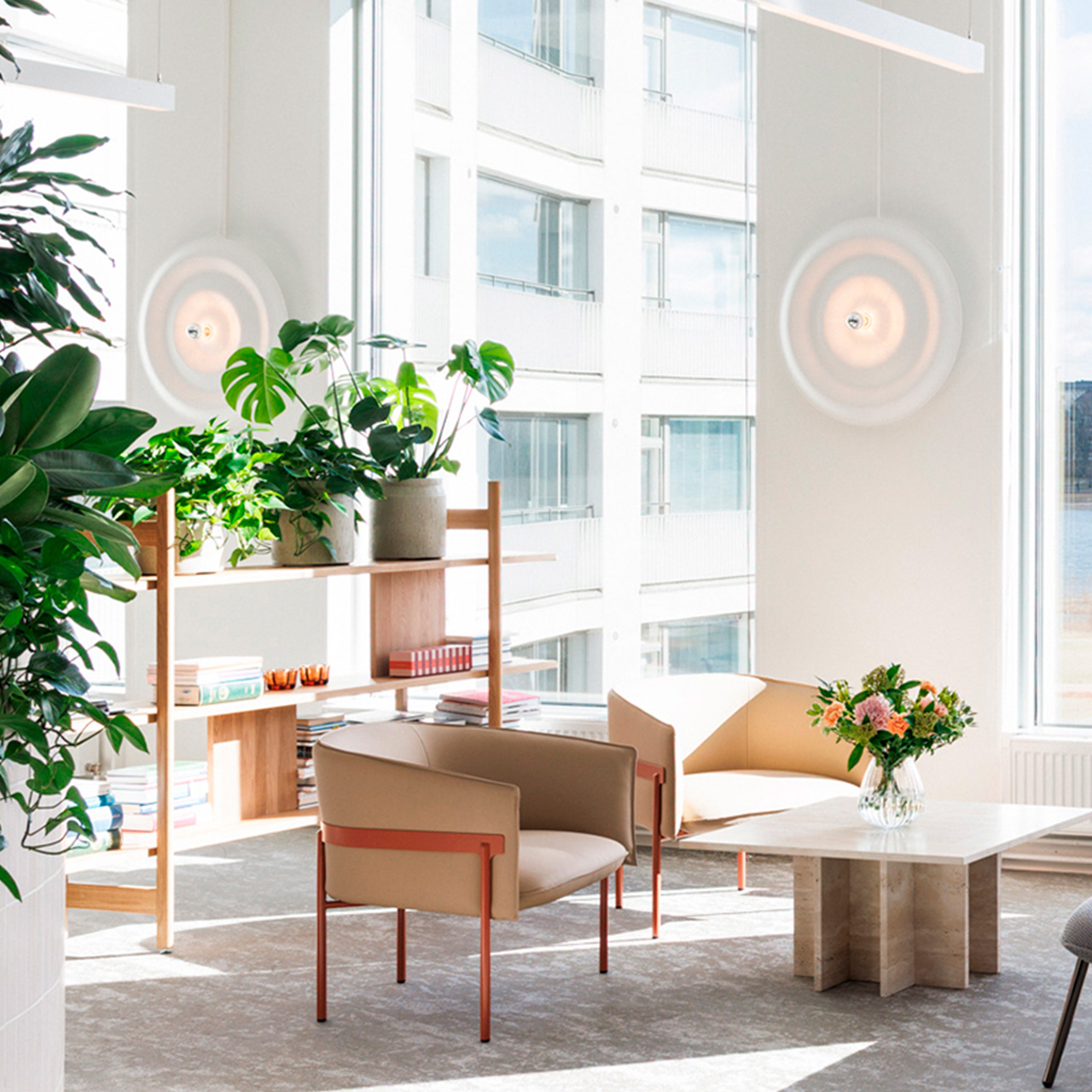
How does the workplace affect concentration and performance?
Poor acoustics, glare, bad air quality or an awkward layout all compete for attention. None of them has to be dramatic to have an effect; repeated small distractions are enough to make focused work more tiring.
Research points to several ways in which the physical environment can support both performance and wellbeing:
- Better conditions for demanding work: Harvard research found markedly higher cognitive scores in environments with improved ventilation and indoor air quality. For organisations that rely on judgement, planning and problem-solving, those conditions matter.
Source: Allen et al. (2016). Environmental Health Perspectives
- Natural light and alertness: Access to daylight is not only an aesthetic choice. It affects sleep, alertness and how people feel during the working day.
Source: Boubekri et al. (2014). Journal of Clinical Sleep Medicine
- Less sensory load: Natural materials, visual softness and biophilic elements can help create a calmer environment. That becomes especially relevant when people are already dealing with change, complex work or a high cognitive load.
Source: Browning & Ryan (2014). 14 Patterns of Biophilic Design
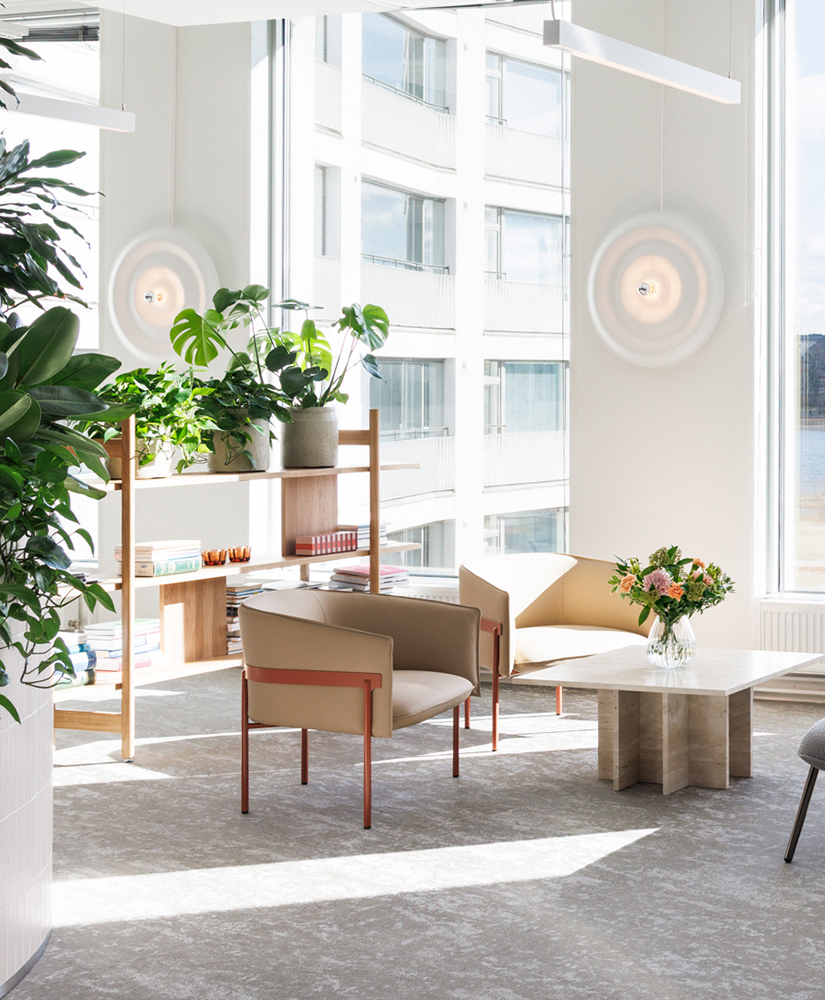
A good workplace removes friction
The best workplaces do not demand constant attention from the people using them. There is a suitable place for a call, a quiet setting for focused work and enough variety for collaboration without turning every part of the office into the same kind of space.
That is also what makes a workplace feel good to use. Comfort is not only about furniture or finishes; it comes from the sense that the environment supports the task at hand instead of getting in the way.
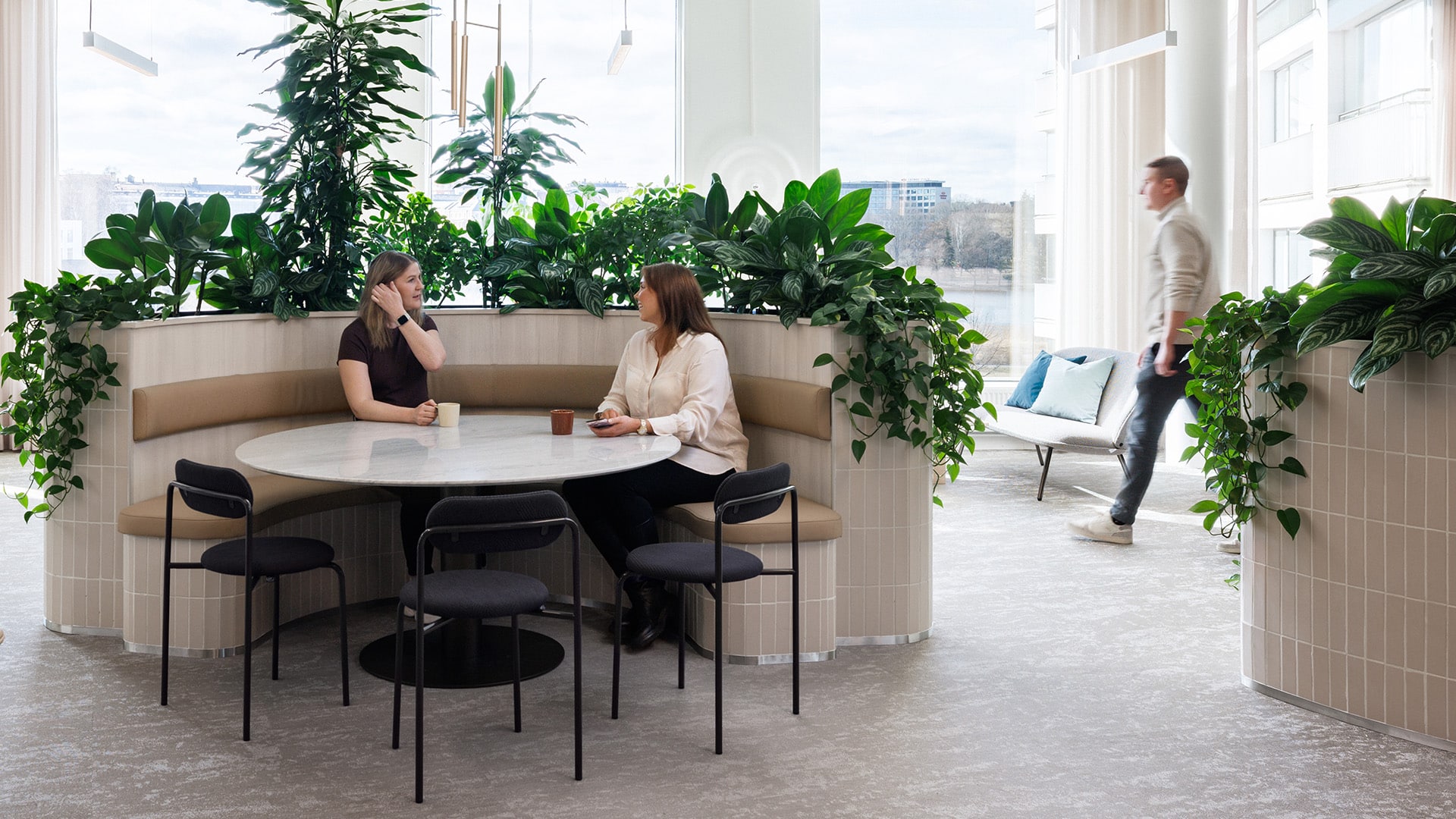
At Nordnet, the move from darker, tighter spaces to a lighter and more open workplace changed both the feel of the office and the way shared areas could be used. The material palette, lighting and spatial solutions were developed to support everyday work and interaction.
Workplace change is also a management decision
A workplace project inevitably communicates priorities. It shows what kinds of work the organisation wants to support, how much value it places on shared time and how seriously it takes the day-to-day experience of its people.
That is why the strongest workplace projects are not driven by appearance alone. They start with the work itself: what people need to do, where the current environment creates friction and which changes would make the biggest difference.
When those questions are answered well, the result can look better too. More importantly, it works better.