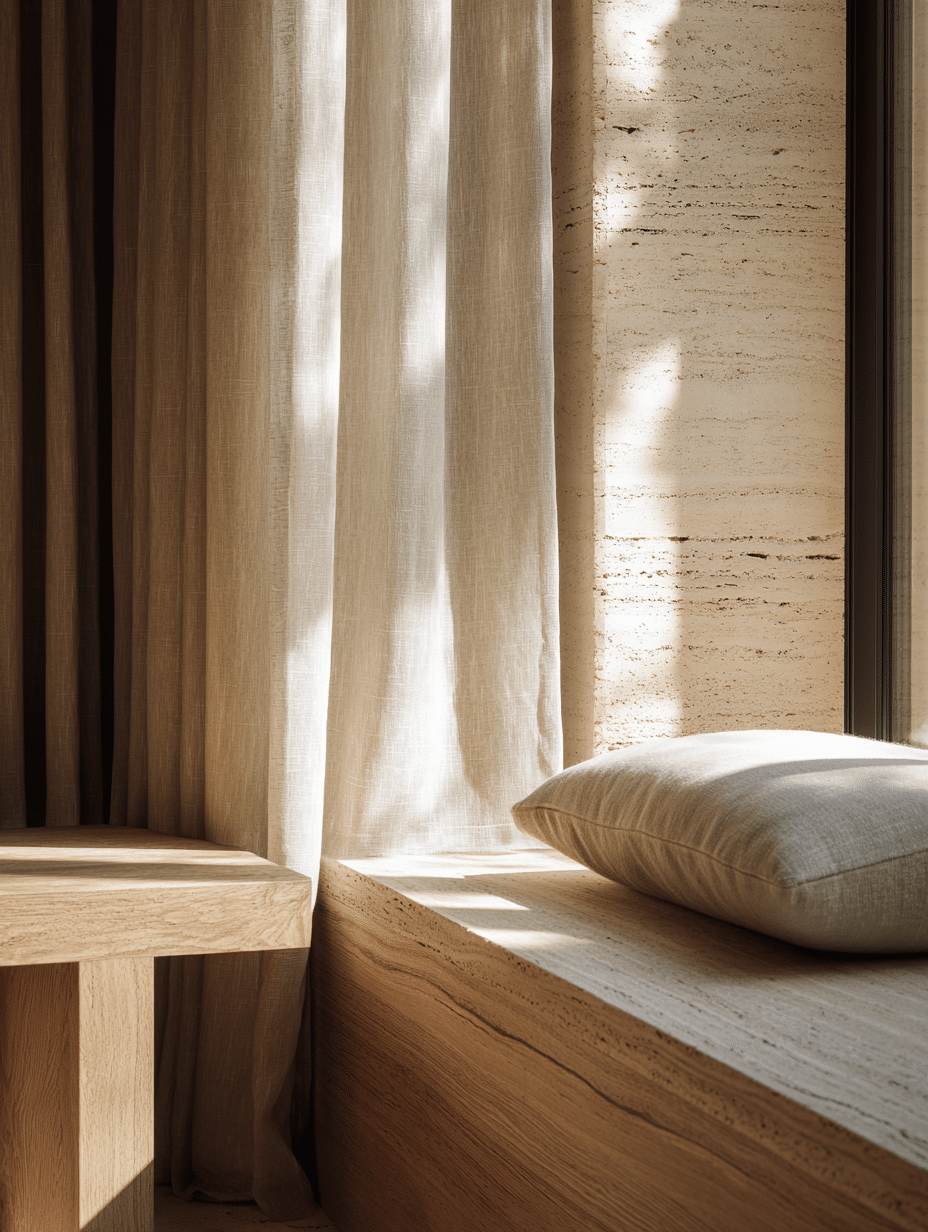
Knowledge work places a constant demand on attention. Screens, notifications and information-heavy tasks already create a high cognitive load; a visually flat or poorly resolved environment adds nothing useful to the working day.
Art can. In a workplace, it can provide visual interest, support identity, help people orientate themselves and create moments where attention shifts away from the task for a while. That makes it more than an afterthought added once the furniture is in place.
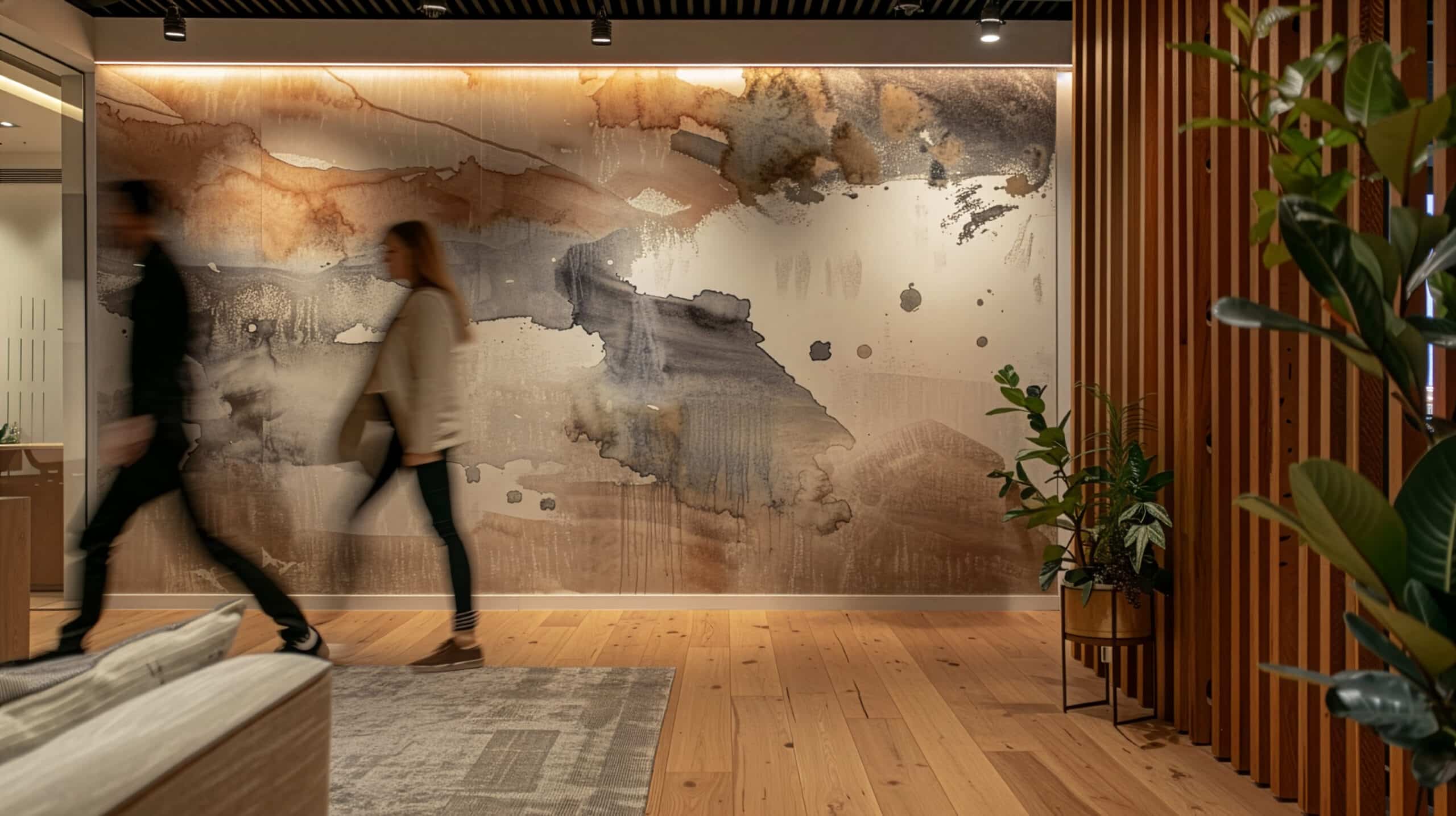
Art gives attention somewhere else to go
Sustained concentration is tiring. Research into aesthetic experience and the brain suggests that looking at art can engage neural networks associated with internally directed thought, allowing attention to shift away from a demanding task for a moment (Vessel et al. 2012).
The workplace studies cited in the original article point in a similar direction. Research by the University of Exeter found that offices enriched with art and plants could outperform very lean environments in productivity terms (Knight & Haslam 2010). The useful point is not that every office needs more decoration; it is that a completely stripped-back environment is not automatically the best setting for work.
Art can also help organise the workplace
Visual elements can do practical work. A large piece can act as a landmark in an open floorplate, give a shared area its own identity or change the tone of a room used for difficult conversations.
That makes art relevant to wayfinding and zoning as well as atmosphere. The key is to consider it early enough that it becomes part of the spatial concept rather than something fitted into whatever wall happens to be left empty.

Workplace art is not limited to framed pieces
In commercial interiors, art can be integrated into the architecture, furniture and finishes in many different ways. It can strengthen the identity of the space without turning the office into a branded showroom.
Examples include:
- Bespoke spatial elements: Joinery, screens or acoustic structures can become distinctive installations when form, graphics or material treatment are developed specifically for the space.
- Murals and applied graphics: Wall treatments and glass manifestations can add character, improve privacy and carry elements of the brand in a more spatial way.
- Sculptural lighting: A luminaire can become a focal point when its form and placement are part of the architectural composition rather than a purely functional lighting solution.
- Integrated planting: Bespoke planters or planted structures can introduce softness and biophilic elements while also helping to define zones.

The surrounding fit-out needs to be resolved properly
Art is difficult to appreciate if the rest of the interior is visually noisy or poorly finished. In commercial interiors, the quality of the background matters: junctions, lighting, exposed services and fixing details all affect the way an artwork or installation reads.
A few practical points matter in particular:
- Detailing: Poorly resolved trims, fixings or junctions compete for attention. Clean detailing gives the visual elements room to work.
- Lighting: Colour rendering, glare and reflections need to be considered, especially where artwork shares the same field of view as screens and workstations.
- Building services: Ventilation, cabling and other services should be coordinated so they do not cut through or visually dominate key areas of the interior.
How to introduce art into an existing workplace
Start with the role it needs to play. Is the aim to create a calmer focus area, give a social space more character, improve wayfinding or express something about the company to visitors?
Then look at the setting. Lighting, wall construction, sightlines, acoustics and the surrounding material palette all affect what will work. In some cases, improving the background conditions is more important than buying a more expensive piece.
When art is considered as part of the interior architecture rather than as decoration, it tends to sit more naturally within the workplace – and to do more than simply fill a wall.