
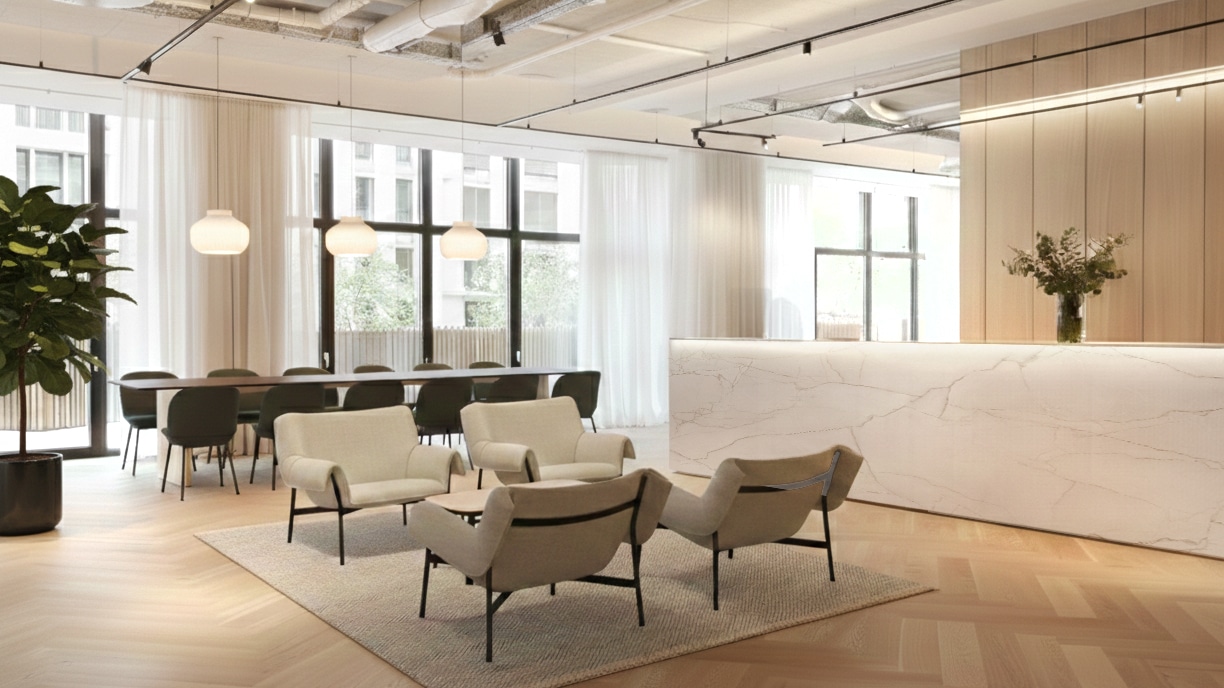
Workplace strategy in Finland is at an interesting point. Hybrid work has changed how offices are used, while many organisations are still carrying space planned for a very different pattern of work.
Across Europe, the discussion has moved beyond simply reducing square metres. The more useful question is what the remaining space needs to do: support collaboration, provide good conditions for focused work and remain adaptable as the organisation changes.
The office has become more social – but not only social
Finland and the other Nordic countries have high levels of remote and hybrid work. That makes the office more important as a place for meeting colleagues, sharing knowledge and doing the kinds of work that benefit from being together.
Gensler’s Global Workplace Survey 2025 shows a clear increase in the time people spend socialising and collaborating at the office. JLL’s 2025 data also points to a familiar weekly pattern, with office utilisation peaking from Tuesday to Thursday.
That does not mean every office should become one large collaboration space. People still need acoustic privacy and good settings for concentration. The challenge is to provide the right mix.

Smaller portfolios put more pressure on each square metre
One of the clearest trends in European corporate real estate is portfolio consolidation. The CBRE European Real Estate Market Outlook 2026 describes companies reducing inefficient space while concentrating investment in higher-quality offices.
That changes the design brief. If the total office footprint is smaller, the remaining space needs to work harder. Layouts need to accommodate different modes of work, furniture should be durable and reconfigurable, and fixed elements should not make future change unnecessarily expensive.
This is where adaptability matters. It does not mean making every element movable; it means understanding which parts of the fit-out are expensive to change and which can be adjusted as needs evolve.
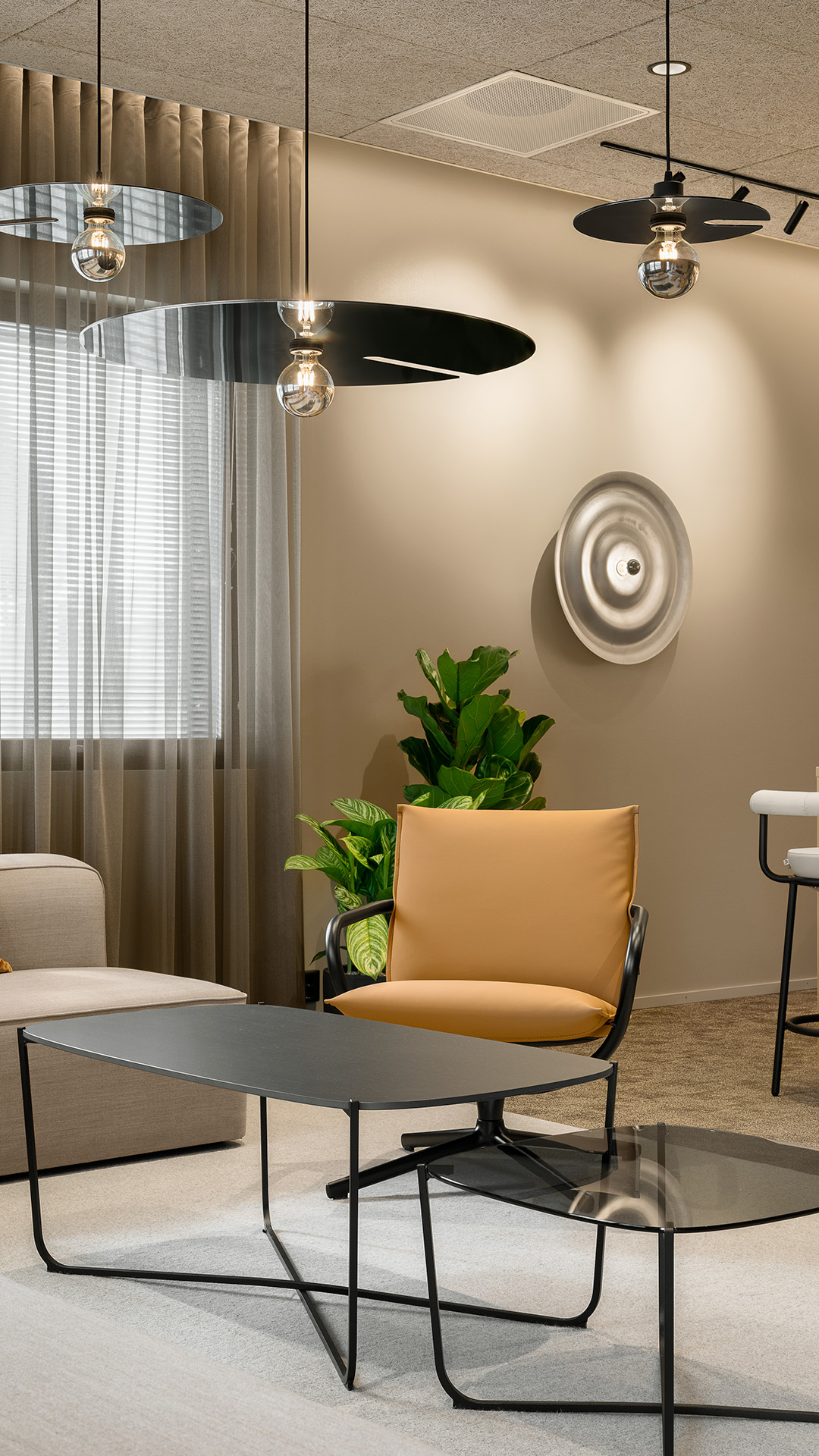
Good conditions still matter for individual work
Knowledge work depends on more than access to a desk. Acoustic privacy, appropriate lighting, indoor air quality and a sensible choice of work settings all affect whether people can concentrate and move between different tasks without unnecessary disruption.
Gensler’s research describes the shift towards a high-performance workplace rather than a uniform office full of identical workstations. In practice, that means giving people access to the right setting for the work they are doing at that moment.
The workplace is part of the employer proposition
The office is not the only reason someone joins or stays with a company, but it contributes to the overall employee experience. A poorly functioning workplace sends its own message, particularly when the organisation is competing for specialist talent.
Leesman’s Focus Forward (2025) makes a useful distinction between efficiency and effectiveness. The question is not only how tightly space can be used, but whether it helps people do their work well.
For many organisations, a smaller amount of well-planned space will therefore make more sense than a larger office that is cheap per square metre but poorly matched to the work.

Workplace strategy should start with the business, not the floorplan
The most useful workplace strategies connect space to the organisation’s direction: how the business expects to grow, how teams work together, what kind of presence the office needs to support and how much uncertainty should be built into the plan.
That does not require predicting the future perfectly. It requires making conscious choices about utilisation, quality, adaptability and where capital is tied up in the fit-out.
For Finnish organisations, that may be the most relevant lesson from the wider European market: optimise the workplace for the work and the organisation, not simply for the lowest possible number of square metres.